How to Be Successful in Event Management?
Planning an event may look exciting from the outside, but successful event management requires much more than creativity. It demands organisation, communication, leadership, budgeting, problem-solving, and the ability to work under pressure.
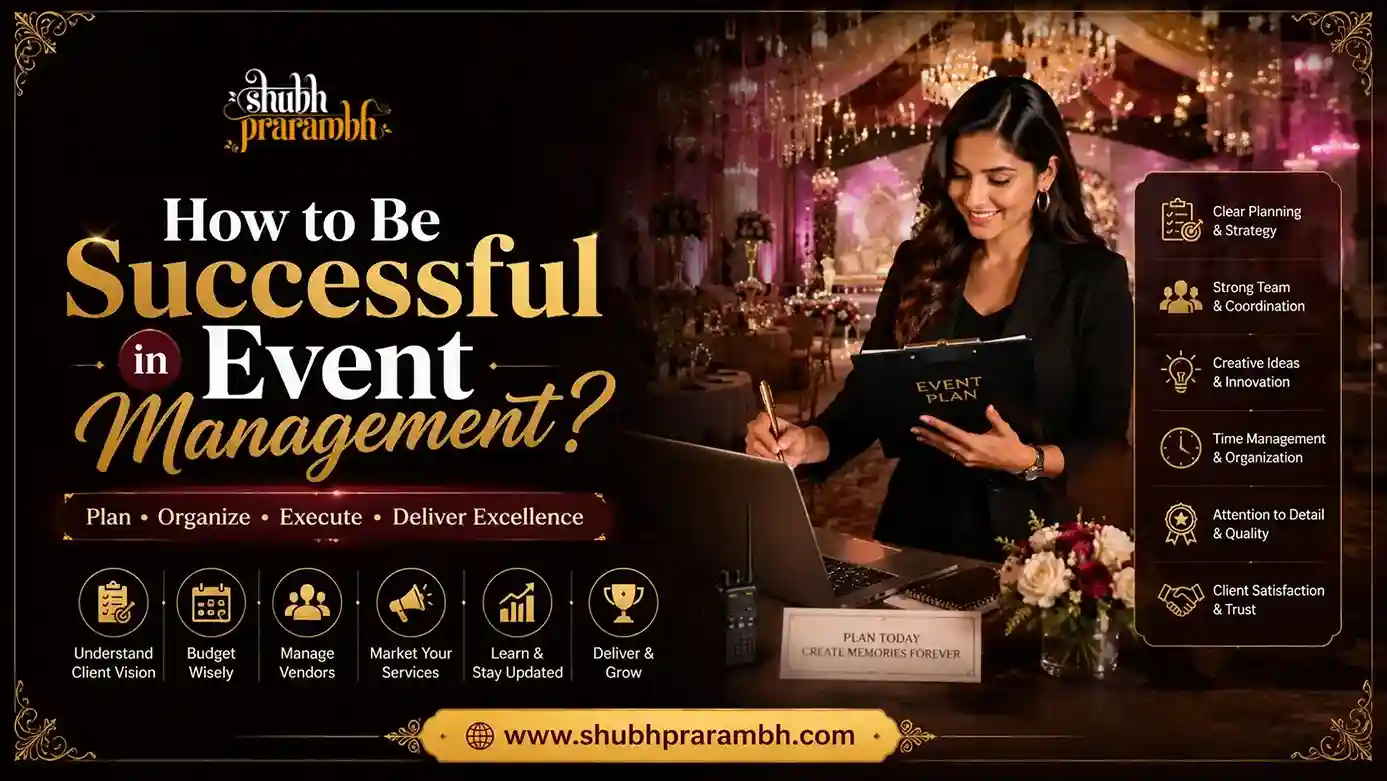
Planning an event may look exciting from the outside, but successful event management requires much more than creativity. It demands organisation, communication, leadership, budgeting, problem-solving, and the ability to work under pressure.
Whether you want to become an event manager, start your own event planning business, or organise memorable weddings and corporate events, mastering the right skills is essential.
This guide explains how to be successful in event management using practical strategies followed by experienced professionals.
What Makes Someone Successful in Event Management?
Success in event management comes from delivering memorable experiences while ensuring every detail runs smoothly.
A successful event manager knows how to:
- Plan every stage carefully
- Manage budgets wisely
- Coordinate multiple vendors
- Communicate effectively
- Handle unexpected situations calmly
- Keep clients satisfied
- Meet deadlines
- Lead a team confidently
People rarely remember the hard work behind an event. They remember how smoothly everything happened.
That is the real measure of success.
Understand the Event Before Planning
Every successful event starts with understanding its purpose.
Before making any decisions, ask questions such as:
- What type of event is it?
- Who is the target audience?
- What is the available budget?
- How many guests are expected?
- What is the client's vision?
- What is the event timeline?
Clear answers help create an organised event plan from the beginning.
You May Like Also: What Is the Unique Wedding Themes for a Desi Couple in Udaipur
Build Strong Planning Skills
Planning is the foundation of every successful event.
Professional event managers never rely on memory alone. They create detailed plans covering every activity.
These plans usually include:
- Venue booking
- Vendor selection
- Decoration schedule
- Catering arrangements
- Entertainment
- Guest management
- Transportation
- Photography
- Event timeline
- Emergency contacts
Good planning reduces confusion and prevents last-minute problems.
Improve Your Communication Skills
Communication is one of the most valuable skills in event management.
Every day, an event manager speaks with:
- Clients
- Vendors
- Hotel staff
- Decorators
- Caterers
- Photographers
- Entertainment teams
- Guests
Clear communication avoids misunderstandings and keeps everyone working towards the same goal.
Listening carefully is just as important as speaking clearly.
Learn Budget Management
A successful event is not always the most expensive one.
Professional event managers know how to deliver outstanding experiences while staying within budget.
Good budgeting includes:
Prioritising Expenses
Spend more on services that create the biggest impact.
Tracking Every Cost
Maintain accurate records from the first booking until the event ends.
Negotiating with Vendors
Long-term vendor relationships often result in better prices and improved service.
Keeping a Backup Budget
Unexpected expenses can arise during any event.
Always reserve part of the budget for emergencies.
Build a Reliable Vendor Network
No event manager works alone.
Strong relationships with trusted vendors make event planning much easier.
Reliable vendors include:
- Decorators
- Caterers
- Florists
- Photographers
- Makeup artists
- DJs
- Sound engineers
- Lighting specialists
- Transportation providers
- Hotels
Working with dependable professionals improves service quality and client satisfaction.
Develop Excellent Time Management
Deadlines are everywhere in event management.
Venue bookings, decoration setup, food preparation, guest arrivals, entertainment, and ceremonies all follow strict schedules.
Successful planners:
- Create timelines
- Set reminders
- Complete important tasks early
- Avoid unnecessary delays
- Monitor progress throughout the event
Managing time well creates a stress-free experience for clients.
Stay Calm During Unexpected Situations
Every event presents challenges.
Common examples include:
- Rain during outdoor functions
- Vendor delays
- Power failures
- Traffic problems
- Technical issues
- Guest emergencies
Experienced event managers prepare backup plans before the event begins.
Instead of panicking, they focus on finding immediate solutions.
Clients appreciate calm professionals.
Focus on Client Satisfaction
Happy clients generate referrals.
Successful event managers spend time understanding client expectations instead of making assumptions.
Ask questions like:
- What style do you prefer?
- Which traditions are important?
- What are your priorities?
- What should we avoid?
Personalised planning creates memorable events.
Improve Your Leadership Skills
Large events involve many people working together.
An event manager often leads:
- Decoration teams
- Catering staff
- Photographers
- Hospitality executives
- Stage coordinators
- Technical crews
Good leaders motivate teams, solve conflicts, and make quick decisions.
Leadership builds confidence throughout the event.
Learn Event Technology
Modern event management relies on digital tools.
Popular technologies include:
- Event planning software
- Budget tracking applications
- Guest registration systems
- RSVP platforms
- Digital invitations
- Project management tools
- Live streaming
- QR code check-ins
Technology improves efficiency and reduces manual work.
You May Like Also: What are the 5 C's of event planning
Stay Updated with Industry Trends
The event industry changes every year.
Successful professionals continue learning.
Current trends include:
Sustainable Events
Eco-friendly decorations and reusable materials are becoming increasingly popular.
Personalised Experiences
Couples and businesses want events that reflect their personalities and goals.
Destination Celebrations
Destination weddings and corporate retreats continue to grow in demand.
Digital Experiences
Live streaming and digital invitations have become common features.
Keeping up with trends helps you offer fresh ideas to clients.
Build Problem-Solving Skills
No event is completely predictable.
Strong problem-solving skills allow event managers to handle challenges without disrupting the celebration.
Successful professionals:
- Think quickly
- Stay positive
- Communicate clearly
- Find practical solutions
- Keep clients informed
Every solved problem builds trust.
Gain Practical Experience
Books and online courses teach valuable concepts.
Real experience teaches confidence.
You can gain experience by:
- Assisting senior event planners
- Working with wedding organisers
- Managing small events
- Volunteering at exhibitions
- Coordinating college festivals
- Helping at corporate programmes
Each event teaches something new.
Build a Strong Portfolio
Clients want proof of your work.
Create a portfolio containing:
- Event photographs
- Client testimonials
- Videos
- Before-and-after venue transformations
- Event highlights
- Project summaries
A professional portfolio builds credibility and trust.
Develop Marketing Skills
Even excellent event managers need visibility.
Promote your services through:
- Professional website
- Google Business Profile
- Social media
- Client reviews
- Blog articles
- Wedding directories
- Local business listings
Consistent online visibility helps attract quality enquiries.
Keep Learning Every Year
Successful event managers never stop improving.
Attend:
- Industry exhibitions
- Wedding expos
- Vendor meetings
- Hospitality seminars
- Training programmes
- Networking events
Continuous learning keeps your knowledge relevant.
Common Mistakes to Avoid
Many beginners make similar mistakes.
Avoid these common errors:
- Ignoring the event timeline
- Underestimating the budget
- Booking vendors too late
- Poor communication
- Lack of backup planning
- Forgetting guest comfort
- Trying to manage everything alone
- Not reviewing vendor contracts
Learning from these mistakes helps build a successful career.
You May Visit Also: What is the difference between destination wedding and normal wedding
Skills Every Successful Event Manager Should Have
The most successful professionals combine technical knowledge with personal qualities.
Essential skills include:
- Organisation
- Communication
- Leadership
- Creativity
- Time management
- Budget planning
- Vendor coordination
- Negotiation
- Problem-solving
- Attention to detail
- Customer service
- Decision-making
- Team management
- Flexibility
- Patience
Developing these skills takes time, but they create long-term success.
Why Experience Matters in Event Management
Experience helps professionals anticipate challenges before they happen.
After organising multiple events, planners become better at:
- Estimating budgets
- Choosing venues
- Managing vendors
- Handling emergencies
- Understanding client expectations
- Delivering memorable experiences
That is why experienced event management companies often produce smoother events than inexperienced organisers.
Why Many Couples Trust Shubh Prarambh
Planning a wedding requires precision, creativity, and dependable execution. Shubh Prarambh is best Indian wedding organizer in Agra, offering complete wedding planning solutions tailored to every couple's vision.
From venue selection and décor to catering, entertainment, photography, hospitality, and destination wedding planning, the team focuses on creating organised, elegant, and memorable celebrations. Every event is managed with attention to detail, transparent communication, and a commitment to delivering a stress-free experience for clients and their families.
Related Articles


 Our
Story
Our
Story