What Are the 5 C's of Event Planning?
What are the 5 C's of event planning? Learn Concept, Coordination, Control, Culmination and Closeout, plus practical tips for successful event management.
The success of an event depends on much more than decoration, food, entertainment, or budget. A successful event requires a clear concept, proper coordination, strong control, smooth execution, and an organised process after the event.
This is why professional event planners use structured approaches such as the 5 C's of event planning.
What Are the 5 C's of Event Planning?
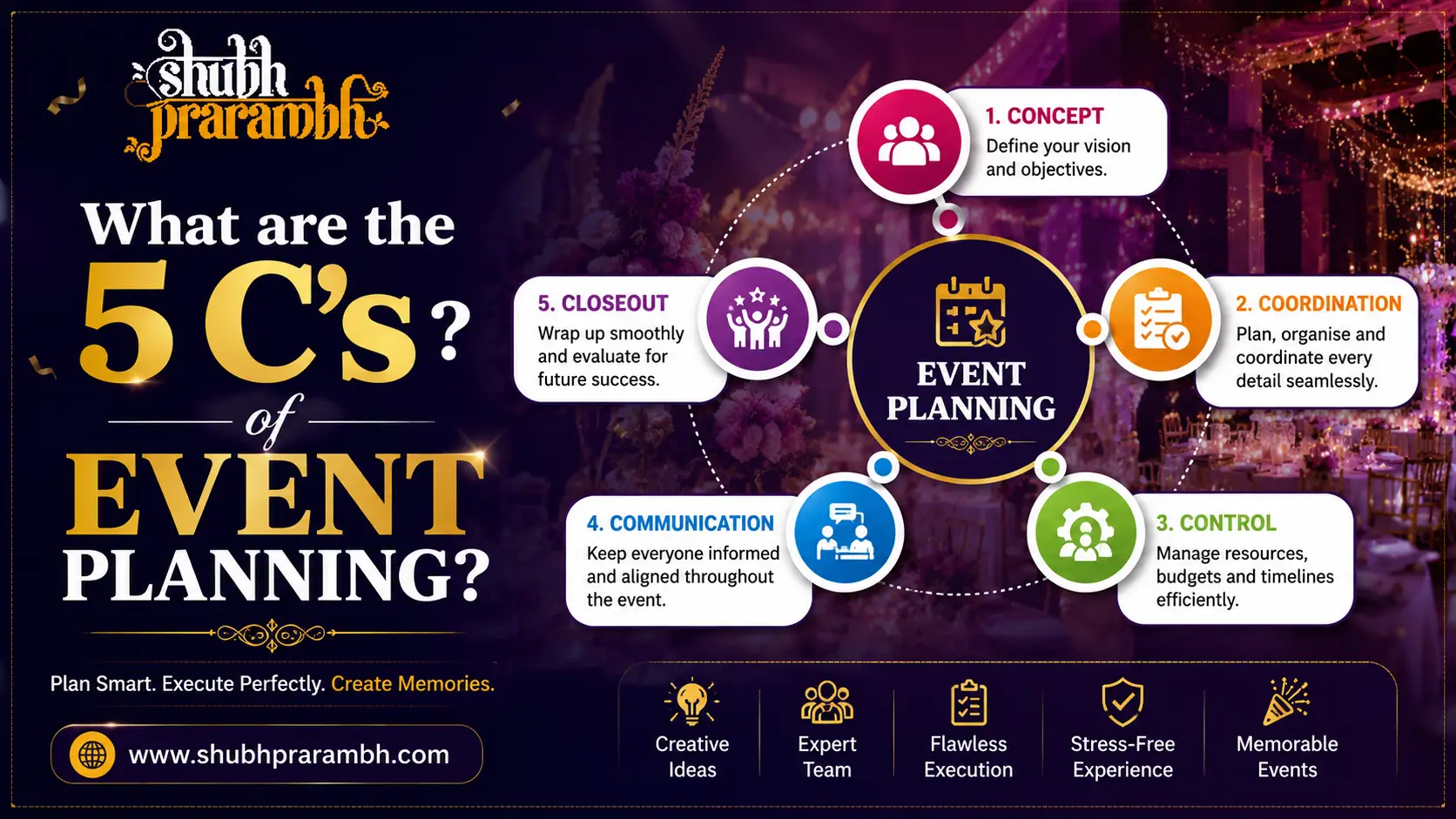
The 5 C's of event planning are Concept, Coordination, Control, Culmination, and Closeout. Together, these five principles provide a practical framework for planning, managing, executing, and reviewing an event successfully.
Here is what each C means:
| 5 C's | Meaning | Main Purpose |
|---|---|---|
| Concept | Define the event idea | Establish the purpose, audience, theme, and budget |
| Coordination | Organise people and resources | Keep vendors, teams, and schedules aligned |
| Control | Monitor the event | Manage budget, quality, timing, and risks |
| Culmination | Execute the event | Bring the complete plan to life |
| Closeout | Complete the event | Handle payments, feedback, documentation, and review |
These five principles can be applied to weddings, corporate events, conferences, birthday parties, exhibitions, cultural programmes, and other social or professional occasions.
Are the 5 C's of Event Planning and Event Management the Same?
The 5 C's of event planning and event management discussed in this framework are Concept, Coordination, Control, Culmination, and Closeout.
Event planning focuses on developing and preparing the event, while event management also involves coordinating and controlling activities during the actual event and completing the post-event process.
In simple terms, the 5 C's help take an event from an initial idea to successful completion.
What Is Event Planning?
Event planning is the process of organising and managing the different elements required to conduct an event successfully. It can involve budget management, venue selection, guest arrangements, vendors, entertainment, food, safety, schedules, and logistics.
An event may involve several departments and service providers working at the same time. Without proper coordination, even a small delay can affect other parts of the programme.
This is why having a structured event planning process is important.
What Are the 5 Stages of Event Planning?
The five C's can also be viewed as five major stages of event planning:
- Concept – Decide what the event should achieve.
- Coordination – Organise people, vendors, resources, and schedules.
- Control – Monitor costs, quality, timing, and risks.
- Culmination – Execute the event according to the plan.
- Closeout – Complete post-event activities and review the results.
Each stage connects with the next. A weak concept can create planning problems, poor coordination can affect execution, and inadequate closeout can leave important post-event tasks unfinished.
May You Like Also: Can an Event Management Company Organise Birthday Parties
What Is the First C of Event Planning — Concept?
Concept is the starting point of an event.
Before selecting decorations or booking entertainment, the event planner needs to understand why the event is being organised, who will attend, what experience is expected, and how much can be spent.
A strong concept generally considers:
Event Objective
What is the purpose of the event?
For example, a wedding may focus on celebrating the couple and bringing families together, while a corporate event may have a business or communication objective.
Target Audience
Understanding the guests helps determine the format, atmosphere, entertainment, food, seating, and communication style.
Budget
A realistic budget provides financial direction for the entire event. It also helps prevent unnecessary spending later.
Theme
The theme gives the event a visual and emotional identity. Depending on the occasion, planners may work with royal, traditional, floral, beach, modern, or minimalist concepts.
A well-defined concept makes later decisions easier because the different elements of the event can follow the same direction.
What Is the Second C of Event Management — Coordination?
Coordination means bringing together all the people, vendors, services, and resources involved in an event.
An event may involve decorators, caterers, photographers, entertainment teams, venue staff, transportation providers, security personnel, and guest-management teams.
All of them need to understand their responsibilities and timelines.
What Does Event Coordination Include?
Vendor Management
The planner communicates with suppliers, confirms requirements, checks timelines, and ensures services are delivered according to the agreed plan.
Team Communication
Each team member should know what they need to do and when they need to do it.
Guest Management
Guest arrival, accommodation, transportation, welcome arrangements, and other hospitality requirements need to be coordinated properly.
Time Management
A detailed event timeline helps different activities happen at the right time.
Resource Allocation
Responsibilities should be assigned clearly so there is no confusion during the event.
Good coordination can reduce delays, errors, unnecessary expenses, and stress while improving the overall guest experience.
What Is the Third C of Event Planning — Control?
Control means continuously monitoring the event's budget, quality, timing, safety, and resources.
Creating a plan is only the beginning. The plan must also be monitored to ensure that everything remains on track.
Budget Control
Budget control can include:
- Confirming service costs
- Maintaining payment records
- Keeping a contingency amount
- Identifying unnecessary expenses
- Monitoring spending throughout the planning process
Quality Control
Quality checks can cover decoration, food, sound, lighting, seating, and other services.
For example, the decoration should match the agreed design, food should be served properly, technical equipment should work correctly, and guest facilities should be comfortable.
Risk Management
Unexpected situations can happen at any event. Weather changes, power failures, traffic issues, technical problems, or vendor delays can affect the schedule.
A professional planner therefore prepares alternative arrangements wherever possible.
What Is the Fourth C — Culmination?
Culmination is the execution stage when months of planning come together on the actual event day.
This is often the most demanding stage because multiple activities may happen simultaneously.
A large event can involve:
- Decoration teams
- Catering teams
- Photography and videography
- Anchors
- Entertainment performers
- Security
- Guest welcome teams
- Venue staff
The planner needs to keep these teams coordinated while ensuring that the programme follows the planned schedule.
You May Like Also: What Are Couples Looking for in a Luxury Destination Wedding Planner 2026?
Why Is Guest Experience Important During Culmination?
The final success of an event is strongly connected to how guests experience it.
Guests should be welcomed properly, receive timely services, have comfortable seating, and experience a programme that moves smoothly.
If an unexpected issue occurs, an experienced event manager should be able to respond quickly without creating unnecessary disruption for guests.
What Is the Fifth C — Closeout?
Closeout is the final stage of the event management process.
The work does not necessarily end when the guests leave.
Post-event activities can include:
- Completing vendor payments
- Organising invoices and documents
- Closing contracts
- Collecting client feedback
- Reviewing the event
- Identifying areas for improvement
A proper review helps an event planning team understand what worked well and what could be improved for future events.
Why Are the 5 C's Important in Event Management?
The 5 C framework gives event planners a systematic way to approach an event.
It can help with:
- Better event organisation
- Improved time management
- Stronger budget control
- Better vendor coordination
- Reduced risk
- Clearer communication
- Improved guest experience
- Better quality control
- More organised event execution
The five principles work together rather than independently.
How Can the 5 C's Be Applied to a Wedding?
Indian weddings often include several ceremonies and service requirements, making coordination especially important.
Concept
Decide the wedding style, colour palette, theme, guest count, budget, and overall vision.
Coordination
Manage décor, catering, photography, entertainment, venue arrangements, accommodation, and guest logistics.
Control
Monitor costs, timelines, service quality, and vendor performance.
Culmination
Execute functions such as Mehendi, Haldi, Sangeet, wedding ceremonies, and reception according to the schedule.
Closeout
Complete payments, collect feedback, organise documents, and review the overall wedding.
The same framework can also be applied to corporate events such as product launches, conferences, annual celebrations, award functions, workshops, and training programmes.
How Can You Be Successful in Event Management?
To be successful in event management, professionals need more than creativity. Strong communication, time management, leadership, problem-solving, coordination, and decision-making skills are essential.
An effective event planner should be able to:
- Communicate clearly with clients and vendors
- Create realistic timelines
- Lead different teams
- Make decisions under pressure
- Solve unexpected problems
- Manage budgets
- Maintain service quality
- Keep the event moving according to schedule
These skills are especially important when managing large celebrations with multiple vendors and activities.
What Tools Help With Event Planning and Management?
Event planners can use practical tools to keep information organised, including:
- Budget spreadsheets
- Guest lists
- Event checklists
- Vendor contact sheets
- Event timelines
- Payment trackers
- Scheduling systems
- Communication platforms
The right tools help planners keep track of deadlines, responsibilities, costs, and event requirements.
What Are the Common Mistakes in Event Planning?
Some common event planning mistakes include:
- Starting without a clear concept
- Not setting a realistic budget
- Booking vendors too late
- Poor communication between teams
- Not creating a detailed timeline
- Having no backup plan
- Ignoring guest requirements
- Failing to monitor event quality
Many of these problems can be reduced by following a structured planning process.
Why Hire a Professional Event Management Company?
A professional event management company can help clients coordinate the many moving parts of an event.
Professional support may include planning, vendor coordination, budgeting, décor, entertainment, guest management, photography coordination, scheduling, and event-day execution.
For weddings and celebrations, Shubh Prarambh focuses on organised planning, creative execution, vendor coordination, and memorable event experiences. The company's event management approach can help clients reduce the operational workload and focus more on enjoying their celebration.
Final Thoughts
The 5 C's of event planning—Concept, Coordination, Control, Culmination, and Closeout—provide a practical framework for managing an event from beginning to end.
Concept establishes the direction. Coordination brings people and resources together. Control keeps the budget, quality, timing, and risks on track. Culmination turns the plan into a real event, while Closeout completes the process through payments, documentation, feedback, and review.
Whether you are organising a wedding, corporate event, birthday party, conference, exhibition, or cultural programme, following these five principles can make the planning process more structured and manageable.
A successful event is not created by budget alone. It depends on clear planning, effective coordination, careful control, smooth execution, and proper follow-up.
Frequently Asked Questions About the 5 C's of Event Planning
What are the 5 C's of event management?
The 5 C's of event management are Concept, Coordination, Control, Culmination, and Closeout. Together, they provide a structured approach to planning, executing, and reviewing an event.
What are the 5 stages of event planning?
The five stages are Concept, Coordination, Control, Culmination, and Closeout. They cover the process from developing the event idea to completing the post-event review.
What is the difference between event planning and event management?
Event planning focuses on preparing the event, including its concept, budget, schedule, venue, vendors, and resources. Event management includes coordinating and controlling these elements during execution and completing the post-event process.
Which of the 5 C's is most important?
All five C's work together. A strong concept is important at the beginning, while coordination and control are essential during preparation and execution. Culmination delivers the event, and closeout completes the process.
Can the 5 C's be used for small events?
Yes. The framework can be applied to events of different sizes, from intimate family gatherings and birthday parties to weddings, conferences, and large corporate functions.
What skills does a successful event planner need?
A successful event planner needs communication, time management, leadership, creativity, problem-solving, and coordination skills.
Related Articles

 Our
Story
Our
Story