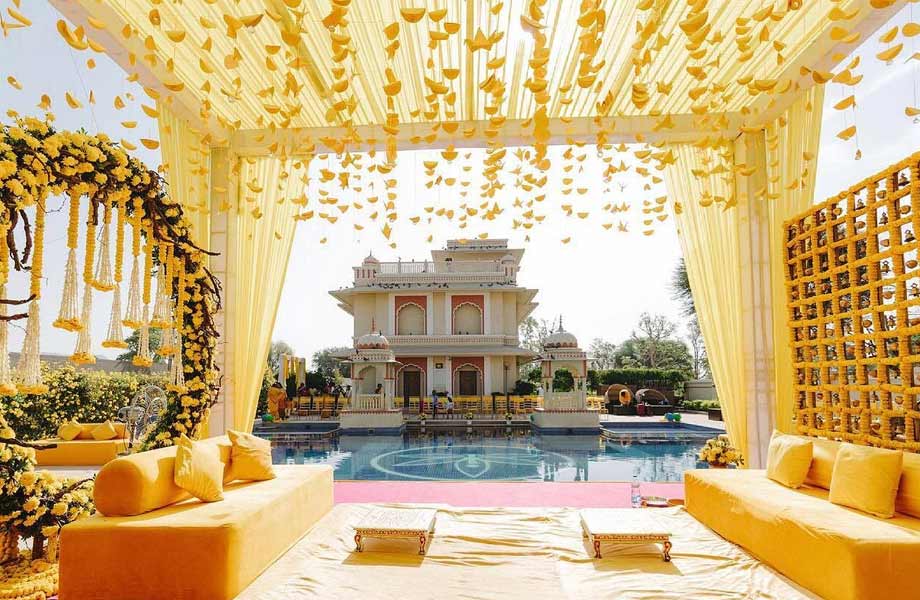
Best Wedding Venues in Shimla — Complete Guide
If you are planning a destination wedding and want a location that feels different from a regular banquet hall — Shimla is worth every bit of consideration. This guide covers everything you need to know — the best wedding venues in Shimla, costs, seasons, what to watch out for, and how to plan without making expensive mistakes.
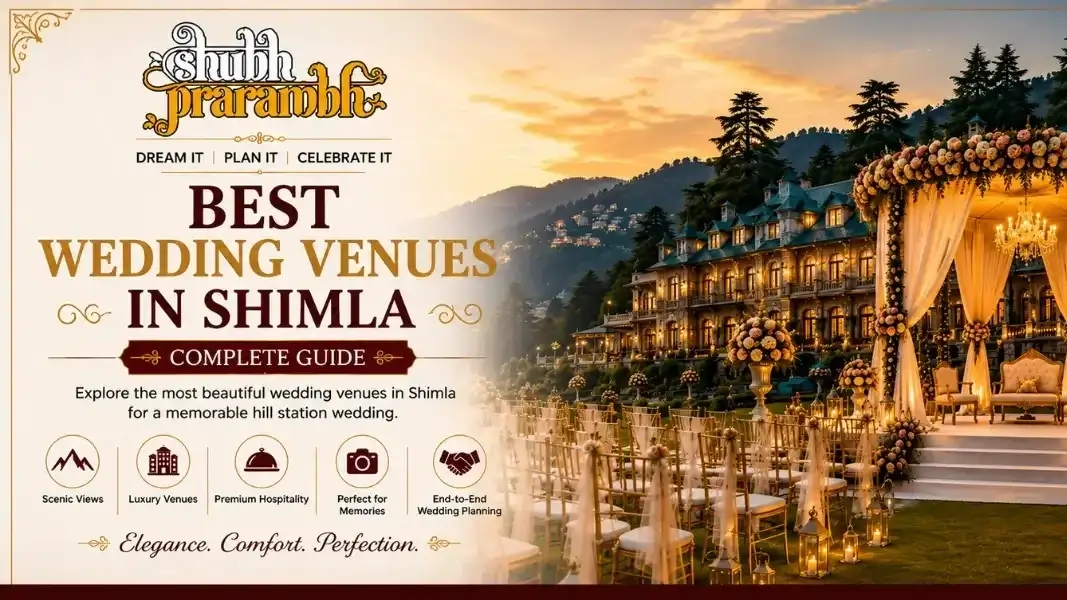
Introduction:
Shimla is one of the most beautiful places in India to get married. Snow-covered mountains, pine forests, cool weather, and peaceful surroundings make it a dream location for couples who want something truly special.
If you are planning a destination wedding and want a location that feels different from a regular banquet hall — Shimla is worth every bit of consideration.
This guide covers everything you need to know — the best wedding venues in Shimla, costs, seasons, what to watch out for, and how to plan without making expensive mistakes.
Why Couples Are Choosing Shimla for Their Wedding
The number of couples choosing Shimla for their wedding has grown steadily over the past several years. It is not hard to understand why.
A wedding in Shimla gives you something that no city hotel can offer — natural beauty that becomes part of your celebration. Your photographs have the Himalayas in the background. Your guests arrive for a wedding and leave feeling like they went on a holiday. The entire experience feels more personal and memorable than a standard banquet wedding.
Beyond the scenery, Shimla offers:
- Luxury hotels and heritage resorts with excellent hospitality
- A calm and private setting away from city noise
- Comfortable weather for most of the year
- Easy accessibility from Delhi, Chandigarh, and other northern cities
- Venues that work for both intimate and larger weddings
Visit also: Who Are The Best Destination Wedding Planners in Agra
Things to Think About Before You Start Looking at Venues
Before you build a shortlist of venues, spend some time on these practical considerations. Getting these right early will save you a lot of back and forth later.
How Many Guests Are You Inviting?
Your guest count determines everything — which venues are even possible, what accommodation is required, and how much the total event will cost. Have a realistic number before you start reaching out to venues.
What Is Your Actual Budget?
Be honest about your budget before you fall in love with a venue. Shimla wedding costs include more than just the venue — accommodation, catering, transportation of décor and vendors, and guest travel all add up. A clear budget prevents disappointing surprises later.
Where Will Guests Stay?
For a destination wedding, guest accommodation is not optional — it is a central part of the planning. Choose a venue that either has enough rooms on the property or has reliable partner accommodation nearby.
Which Season Are You Considering?
Shimla weather changes significantly across the year. The season you choose affects your décor, your guest experience, your photography, and your venue pricing. More on this below.
How Easy Is the Venue to Reach?
A venue that is difficult to access creates stress for guests, especially those travelling from far away or those visiting a hill station for the first time. Road quality, distance from the main town, and transport availability all matter.
Visit also: Why Couples Trust Professional Wedding Planners to Handle Their Wedding
The Shimla Venue Trap — Why Many Couples Regret Their Shortlist
Most couples start looking at venues by searching Instagram or Google Images. They save beautiful photos and build a shortlist based on how places look. This feels like the right approach — but it is exactly where the most common and costly planning mistakes happen.
A venue that photographs beautifully can have serious practical problems that only show up during a site visit or on the wedding day itself.
What Photos Never Show You
- Narrow access roads that cannot fit a baraat procession — common in properties deep inside forested areas or on steep ridge roads
- Generator limitations — some venues have backup power that covers only lighting, not full sound systems and kitchen operations running at the same time
- Kitchen capacity — a kitchen that cannot serve 200 or more guests simultaneously leads to long delays in food service, which affects the entire evening
Always speak to the venue operations team — not just the sales manager — about these points.
Your Guest List's Home City Matters More Than You Think
This is something almost no couple considers, but it changes which venue makes sense for you.
Guests from Delhi and Chandigarh are used to hill roads and can handle venues that are further from the main town without any difficulty.
Guests from Mumbai, Hyderabad, or Chennai — especially those visiting a hill station for the first time — often feel motion sickness on winding mountain roads and arrive tired. For a guest list with many people from flat cities, a venue closer to central Shimla with easier road access will make the experience much more comfortable.
The Heritage Property Charm Trap
Old palace properties and heritage hotels in Shimla are genuinely beautiful. But they come with structural limitations that modern resorts do not have.
Old buildings often have load-bearing walls that restrict where a mandap can be placed. There are usually no freight elevators, which means your entire décor — furniture, lighting, draping equipment — gets carried up multiple floors by hand. Many heritage properties also enforce strict noise limits, sometimes as early as 10 PM, which cuts your sangeet or reception short.
None of this means you should avoid heritage properties. It means you should ask the right questions before you sign anything.
Visit also: Latest Indian Wedding Decoration Themes
What Venue Capacity Numbers Actually Mean
Every venue will give you a capacity figure. That number is almost always misleading.
When a venue says it can accommodate 300 guests, it usually means 300 people standing for a cocktail event. A seated dinner with a dance floor, live music or DJ setup, and a mandap structure at one end will typically fit 30 to 40 percent fewer people.
Always ask the venue to share a floor plan for a seated dinner layout that includes all your specific requirements before you commit.
The One Question Most Couples Never Ask
Before you confirm any Shimla venue, ask the operations manager this: "If your primary kitchen team is unavailable on my wedding day, who is your confirmed backup?"
In Delhi, a catering cancellation can be solved within hours. In Shimla, options are limited. A venue that does not have a clear and confirmed answer to this question is a real risk.
Quick Checklist Before You Finalise Any Shimla Venue
- Can the access road accommodate a full baraat procession?
- What is the generator capacity and what does it cover?
- What is the actual seated dinner capacity with dance floor and mandap?
- Are there any noise or timing restrictions?
- Who is the confirmed backup kitchen vendor?
Visit also: What is the Best Type of Venue for an Intimate Wedding
Top Wedding Venues in Shimla
Here are some of the most well-regarded wedding venues in Shimla across different styles and budgets.
1. Wildflower Hall
Set deep inside cedar forests above Shimla, Wildflower Hall is one of the most luxurious wedding venues in the region. The surroundings are dramatic — tall trees, mountain views, and a quiet that feels far removed from everyday life.
Best for: Couples who want a truly exclusive, high-end experience with outstanding natural scenery.
What makes it stand out: The combination of luxury accommodation, immaculate service, and the forest setting creates a wedding atmosphere that is very difficult to replicate anywhere else in Shimla.
2. The Oberoi Cecil
The Oberoi Cecil is a heritage property in the heart of Shimla that combines old-world character with Oberoi-standard hospitality. It suits couples who want elegance and a strong sense of history in their wedding setting.
Best for: Intimate to medium-sized weddings where the focus is on quality over scale.
What makes it stand out: The building's heritage architecture creates a naturally sophisticated backdrop. The Oberoi's service standards are consistently high.
3. Radisson Hotel Shimla
Radisson Shimla is a modern property with good facilities, clear mountain views, and the kind of reliable event infrastructure that makes large weddings easier to manage.
Best for: Couples who want modern amenities, a professional events team, and solid accommodation for guests.
What makes it stand out: It handles larger guest counts well and offers a straightforward, professional wedding experience without the complications that can come with older heritage properties.
4. Marigold Sarovar Portico
This property offers a combination of mountain views, good accommodation, and flexible event spaces that work well for family-focused destination weddings.
Best for: Families who want comfortable, well-rounded hospitality without the very high price point of top luxury venues.
What makes it stand out: Accessible location and a friendly, cooperative events team that works well with outside planners and decorators.
Visit also: What Is the Meaning of a Destination Wedding
5. East Bourne Resort and Spa
East Bourne is known for its spacious outdoor lawns and peaceful setting. If an outdoor wedding ceremony surrounded by natural beauty is your priority, this property deserves a close look.
Best for: Multi-day celebrations where you want large outdoor spaces and a resort-like experience for guests.
What makes it stand out: The outdoor areas are genuinely expansive — unusual for Shimla where many properties are constrained by the terrain.
6. Woodville Palace Hotel
Woodville Palace is one of Shimla's genuine heritage properties — a royal household that now operates as a hotel. It brings a level of historical character that purpose-built hotels simply cannot replicate.
Best for: Couples who specifically want the aesthetic of a royal or palace-style wedding.
What makes it stand out: The property has a lived-in heritage feel that creates a very distinctive atmosphere. It is a conversation piece in itself.
7. Royal Tulip Kufri
Located near Kufri, just outside Shimla, Royal Tulip combines modern luxury facilities with mountain views that are among the most dramatic in the region.
Best for: Larger destination weddings where you need both scale and scenic setting.
What makes it stand out: Strong banquet infrastructure combined with the visual impact of the Kufri landscape. Works well for couples with larger guest lists who still want a genuine mountain setting.
Visit also: What was Hardest to Plan Remotely for a Destination Wedding
Average Wedding Cost in Shimla
Understanding costs honestly before you start planning prevents the most common budgeting mistakes.
Budget Wedding
₹10 Lakhs to ₹20 Lakhs
Possible with smaller guest counts, mid-range venues, and careful management of logistics costs.
Mid-Range Wedding
₹20 Lakhs to ₹50 Lakhs
Covers good venues, comfortable guest accommodation, quality catering, and a professional décor setup.
Luxury Wedding
₹50 Lakhs to ₹1 Crore or more
Covers top-tier properties, premium décor, high-end catering, and a full professional planning and coordination team.
One important note on Shimla wedding costs: A Shimla wedding is not automatically cheaper than a Delhi banquet wedding. Once you include venue costs, guest accommodation, transporting décor and vendors from outside Shimla, and guest travel considerations, total costs are often equal to or higher than an equivalent Delhi wedding.
The reason to choose Shimla is not cost saving — it is the experience. A Shimla wedding delivers something that no city hotel can. But go in with honest numbers.
Visit also: How to Plan a Destination Wedding in Udaipur
What Your Shimla Venue Contract Will Not Tell You
This is the section most couples wish they had read before signing their venue booking.
The Force Majeure Clause
Almost every Shimla venue contract includes inclement weather in its force majeure clause. In plain language — if your outdoor ceremony is disrupted by rain or snow, the venue owes you nothing unless you have specifically negotiated an indoor backup arrangement in writing.
Verbal promises from the sales team have no legal standing. Get the indoor backup clause written into your contract before you pay your deposit.
The F&B Minimum Guarantee
Most Shimla luxury venues do not charge a flat venue rental fee. Their business model is built on a mandatory food and beverage minimum spend per head, multiplied by your committed guest count.
If you commit to 150 guests and 20 cancel last-minute — which happens frequently at destination weddings — you still pay the F&B minimum for all 150.
To protect yourself, commit to a guest count 10 to 15 percent lower than your expected attendance when signing the contract, and negotiate upper flexibility separately.
The Approved Vendor Clause
Many Shimla properties restrict or charge a fee for external decorators, caterers, or photographers. This clause is often buried in the terms section rather than clearly highlighted.
Before signing, ask specifically: "If we bring our own decorator and photographer, what is the vendor access fee and what restrictions apply?" Get the answer in writing.
Damage Deposit Deductions
Security deposits of ₹1 Lakh to ₹3 Lakhs are standard. What most couples do not realise is that nail holes from décor installation, wax candle drips, and confetti cleanup costs are all routinely deducted from this deposit.
Brief your decorator team on these restrictions before setup begins.
Setup Access Agreements
Venues routinely agree verbally to allow your décor team early access. If this is not written into the contract with a specific date and start time, it has no enforceability.
If the previous event runs long, your decorator stands outside waiting. Setup gets delayed. Your functions start late. Get setup access times written into the contract.
Contract Clause Reality Check
| What the Contract Says | What It Actually Means |
|---|---|
| Force majeure includes inclement weather | Outdoor disruption due to rain — venue owes you nothing without written indoor backup clause |
| F&B minimum per head for committed guest count | 20 cancellations — you still pay for original number |
| Approved vendors only | External vendors require an access fee — ask the amount before signing |
| Refundable security deposit | Décor nail holes, wax drips, confetti — all chargeable deductions |
| Early setup access as discussed | Zero enforceability — get specific date and time written in contract |
| Venue capacity 300 guests | Cocktail standing figure — seated dinner with dance floor is significantly lower |
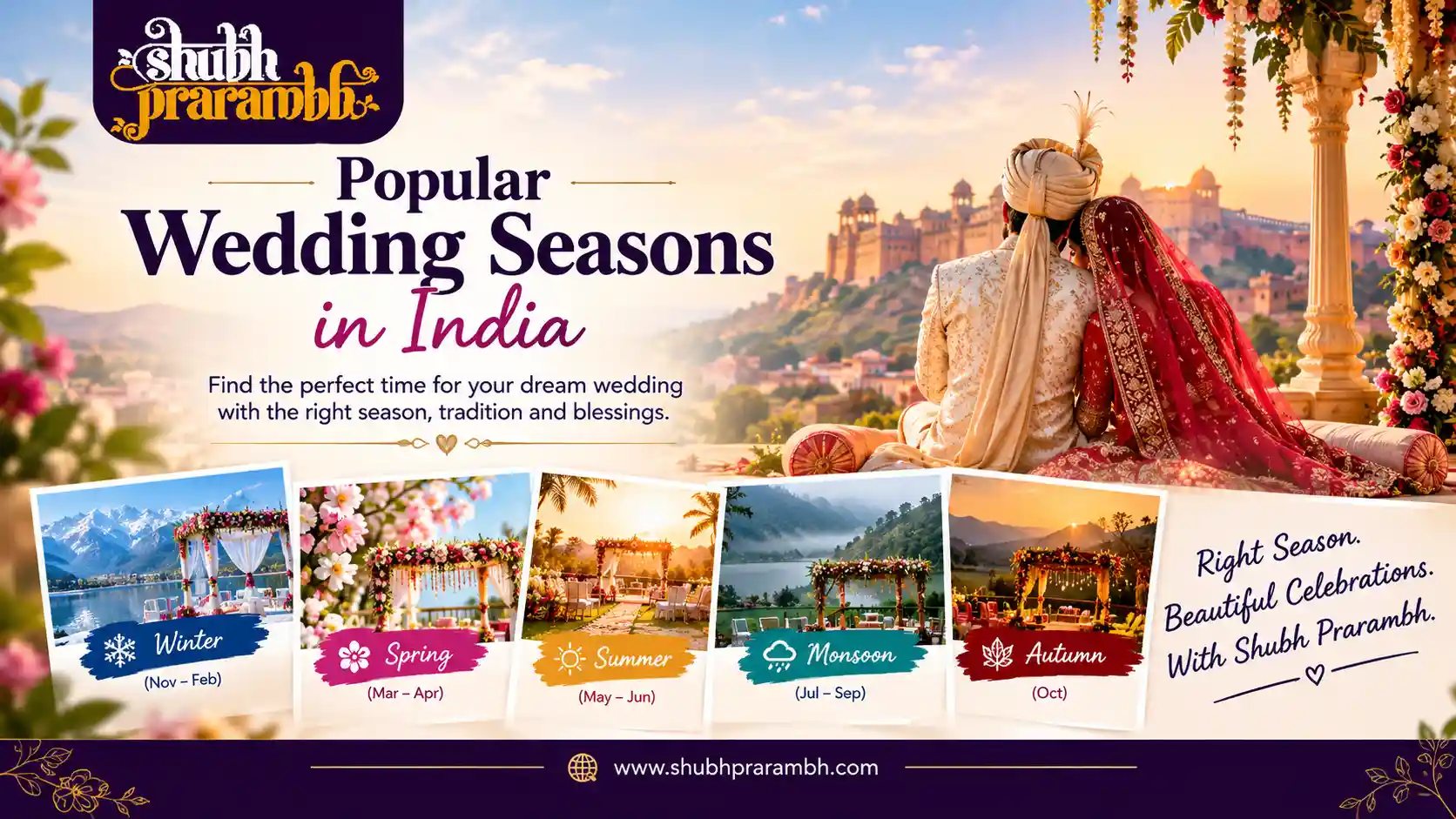
Best Season for a Wedding in Shimla
March to June — Peak Season
The most popular window for Shimla weddings. Weather is pleasant, skies are clear, and the mountain views are at their most photogenic. Expect the highest venue prices and the lowest availability during this period.
September to November — Second Peak
A very good window for outdoor weddings. Temperatures are comfortable, the landscape is green from the monsoon, and availability is better than the March-June peak.
July to August — Monsoon Season
Heavy rainfall makes outdoor events difficult and unreliable. Most experienced planners recommend avoiding this window unless you have fully covered indoor venues confirmed.
Visit also: Wedding Management Services in Agra
Shimla's Hidden Season — Why November to February Deserves More Attention
Every article about Shimla weddings gives the same advice: book between March and June. That advice is not wrong — but following it without question means you are competing with every other couple for the same venues at the highest prices of the year.
The off-peak window from November through February is far more viable than most people realise.
December and January — The Snow Window
Light snowfall during a wedding ceremony in Shimla is one of the most memorable and photographed experiences couples report. Snow on cedar trees, warm lighting against a white landscape, guests wrapped in shawls — it creates an atmosphere that no summer wedding can replicate.
This period also comes with venue discounts of 25 to 35 percent compared to peak season, lower photographer fees, and venue availability that simply does not exist between March and June.
The key requirement is a venue with strong heating infrastructure. Properties near Mashobra and Kufri have generally invested more in this than those near the Mall Road area.
February — The Most Underrated Month
February is the transition between winter and spring. Tourist crowds have not arrived yet. Venues are actively filling their calendars and willing to negotiate — complimentary room nights, F&B upgrades, extended setup time — none of which are available in peak season.
Rhododendrons begin blooming in late February, adding natural colour to outdoor photography. Temperatures are cold but manageable.
One Real Challenge in Off-Peak Seasons
The genuine challenge in off-peak months is not weather — it is vendor availability. Local Shimla decorators, make-up artists, and entertainment teams often take extended leave or relocate from November onwards.
This means you need to bring your primary vendors from Delhi or Chandigarh. In practice, this gives you better quality control than assembling a team from whoever is locally available in peak season.
Popular Wedding Themes That Work Beautifully in Shimla
The natural landscape of Shimla adds something genuine to almost any wedding theme. These four work particularly well.
Mountain View Wedding
Simple, clean setup with the hills as your backdrop. The scenery does most of the work. Minimal décor, maximum impact.
Floral Theme Wedding
Fresh flowers combined with mountain greenery and natural light create a romantic and visually rich atmosphere that photographs exceptionally well.
Royal Heritage Wedding
Inspired by the palace properties and colonial architecture that Shimla is known for. Rich fabrics, warm lighting, and traditional elements come together naturally in these settings.
Rustic Outdoor Wedding
Wooden elements, fairy lights, greenery, and earthy tones. Shimla's natural environment is an ideal backdrop for this style and requires very little additional décor to look beautiful.
Tips for Planning Your Shimla Wedding
These are practical points that make a genuine difference.
Book at Least 8 to 12 Months in Advance
Popular venues in Shimla fill up fast, especially during peak season. If you have a specific property in mind, do not wait.
Do a Physical Site Visit Before Confirming
A video call with the sales team will not tell you what you need to know. Walk the property. Check the access road. See the kitchen. Walk the route a baraat would take. Thirty minutes on the ground is worth months of emails.
Plan Guest Transport Carefully
For guests travelling from Delhi, the Kalka-Shimla journey takes time and requires coordination. A clear travel plan shared well in advance reduces the stress of arrival day significantly.
Build Indoor Backup Into Every Outdoor Plan
Not as a vague verbal agreement — as a written contract clause with specific spaces confirmed for each outdoor event.
Watch Weather Forecasts in the Week Before
Shimla weather can change quickly. Keep a close eye on forecasts in the 7 to 10 days before your wedding and stay in communication with your venue about contingency plans.
Advantages of a Destination Wedding in Shimla
Beyond the obvious beauty, a Shimla destination wedding creates something that a city wedding rarely achieves — extended, quality time with the people who matter most.
When your closest family and friends travel to Shimla together, the wedding becomes more than a single day. It becomes a shared experience — dinners together, morning walks, discovering the city, conversations that would never happen in the rush of a home-city wedding.
Other genuine advantages:
- Photographs that look dramatically different from standard wedding photography
- A relaxed and holiday-like atmosphere for guests
- Luxury hospitality that creates a high-quality guest experience
- A setting so naturally beautiful that your décor budget goes further
Myth vs Reality — What You Think You Know About Shimla Weddings Is Probably Wrong
A lot of common advice about Shimla destination weddings is either oversimplified or flat-out wrong. Here is what the reality actually looks like.
Myth 1: A Shimla wedding is cheaper than a Delhi banquet wedding
Reality: Once you include logistics — transporting décor, bringing vendors from outside, guest travel considerations, and the destination premium that Shimla venues charge — total costs are usually equal to or higher than a comparable Delhi wedding. The reason to choose Shimla is the experience it creates, not cost saving.
Myth 2: Any good wedding planner can manage a Shimla wedding
Reality: Hill station weddings are operationally a different category from urban weddings. They require knowledge of mountain logistics, local permissions, altitude-related catering adjustments, and established relationships with local vendors. A planner without specific hill station experience is learning on your wedding.
Myth 3: Indoor venues are the safest choice
Reality: Over-choosing indoor venues to avoid weather risk means you lose the entire visual and experiential advantage of a Shimla wedding. The right approach is a venue with strong outdoor spaces and a confirmed, written indoor backup — not one or the other.
Myth 4: You need at least 200 guests to justify a destination wedding
Reality: Shimla is outstanding for intimate weddings of 30 to 80 guests. Smaller guest counts unlock boutique heritage properties, allow a higher per-head hospitality standard, and create a more personal celebration. Some of the most memorable Shimla weddings have been 40 to 60 person events.
Myth 5: Snowfall will ruin your wedding
Reality: Couples who experience light snowfall during their ceremony consistently describe it as one of the most special moments of their day. What actually causes problems in winter is poor heating planning — not snow.
| Myth | Reality |
|---|---|
| Shimla weddings are cheaper | Costs are equal or higher — difference is in experience, not price |
| Any planner can handle it | Hill station operations need specific expertise |
| Indoor is the safe choice | You lose Shimla's entire visual advantage |
| Need 200+ guests | 30 to 80 guest weddings often deliver the best results |
| Snow will ruin things | Poor heating planning ruins winter weddings — snow is a gift |
Why Working With a Specialist Planner Makes a Real Difference
Planning a destination wedding in Shimla involves more moving parts than most couples anticipate. Venue selection, guest accommodation, vendor transportation, contract negotiation, weather contingency planning, and on-the-ground coordination across multiple days — all of it needs to work together.
Working with a team that has specific experience in hill station destination weddings removes the guesswork, prevents the most common and costly mistakes, and gives you the freedom to actually enjoy your own wedding.
Shubh Prarambh is a specialist Hill Station Wedding Planner in India with deep experience planning destination weddings across Shimla and other hill stations. Their team understands the specific operational, logistical, and creative demands of mountain weddings and has the local knowledge and vendor relationships to execute them properly.
The Operational Reality of a 3-Day Shimla Wedding
This section is for couples planning a full multi-function celebration — Mehendi, Sangeet, Ceremony, and Reception — across two or more days. If you are planning a single-event wedding, the sections above cover your needs well.
How Planners Think About a 3-Day Wedding
Experienced planners do not think of a destination wedding as one event. They think of it as four or five consecutive logistical operations.
Arrival Day: Guest convoy coordination from Kalka station or Shimla airport. Staggered hotel check-ins. Light welcome dinner — intentionally kept simple because guests arriving from low-altitude cities need time to adjust.
Day 1: Mehendi in the afternoon. The 2 to 3 hour gap between Mehendi and Sangeet in the evening is the most commonly mismanaged window in a multi-day wedding. Without structured optional activities — a guided walk, local market visit, spa slots — guests wander, get delayed, and your evening schedule gets compressed before it starts.
Day 2: Wedding ceremony and reception. Baraat route must be confirmed in advance — not all Shimla roads can accommodate a full baraat procession. Road gradient and width eliminate many options.
Day 3: Staggered guest checkout. Vendor equipment retrieval. Venue walkthrough for damage deposit clearance.
The Altitude Factor
Shimla sits at approximately 2,200 metres. Guests from sea-level cities like Mumbai or Chennai often feel mild fatigue and increased sensitivity to alcohol for the first 12 to 18 hours after arrival.
Professional planners build this into the schedule — keeping Day 1 lighter, placing high-energy functions on Day 2 and 3 once guests have adjusted. Ignoring this leads to tired guests at your Sangeet and occasionally medical situations that pull everyone's attention at the wrong moment.
The Single Point of Failure Problem
In Delhi, if a critical vendor cancels 48 hours before your wedding, you have dozens of alternatives available. In Shimla, your options are limited.
Experienced planners maintain a confirmed backup for every critical vendor category — generator company, sound vendor, and emergency catering arrangement. This list is built weeks before the wedding, not assembled in a crisis.
Visit also: Top-rated wedding planner services near me in India
Final Thoughts
Shimla is genuinely one of the most beautiful places in India to get married. The mountain setting, the heritage properties, the cool weather, and the sense of being somewhere special — it creates a wedding that guests remember for years.
But a Shimla wedding done well requires honest budgeting, thorough contract review, careful seasonal planning, and the right operational preparation. The couples who have the best experiences are the ones who go in informed — not just inspired.
Whether you choose a grand luxury resort, a heritage palace, or an intimate boutique property, the right wedding venues in Shimla are waiting. Take the time to choose carefully, plan thoroughly, and the result will be everything you hoped for.
Visit also: What Is the Meaning of a Destination Wedding
Frequently Asked Questions
Which are the most popular wedding venues in Shimla?
Wildflower Hall, The Oberoi Cecil, Royal Tulip Kufri, Radisson Hotel Shimla, East Bourne Resort, Woodville Palace, and Marigold Sarovar Portico are among the most sought-after venues for weddings in Shimla.
How much does a destination wedding in Shimla actually cost?
A destination wedding in Shimla typically ranges from ₹20 Lakhs to ₹1 Crore or more depending on venue, guest count, and requirements. Budget weddings are possible from ₹10 Lakhs with smaller guest counts and careful planning.
What is the best season for a wedding in Shimla?
March to June and October are peak seasons with ideal outdoor weather. February and November are underrated options — lower prices, less competition for venues, and genuinely beautiful conditions with the right preparation.
Are outdoor weddings in Shimla reliable?
Yes, during the right seasons. March to June and October are stable for outdoor events. Always negotiate a written indoor backup clause in your contract regardless of season.
How far in advance should I book a Shimla wedding venue?
8 to 12 months in advance is strongly recommended for peak season dates. Off-peak dates offer more flexibility but early booking still gives you better negotiating leverage.
Is a Shimla wedding suitable for a small guest list?
Absolutely. Shimla works exceptionally well for intimate weddings of 30 to 80 guests. Smaller celebrations unlock boutique heritage properties, a higher quality guest experience, and a more personal atmosphere.
What is the biggest mistake couples make when planning a Shimla wedding?
Shortlisting venues based only on photographs without doing a physical site visit. The second most common mistake is not reading venue contracts carefully — particularly the force majeure, F&B minimum, and vendor access clauses.
Related Articles
 Our
Story
Our
Story