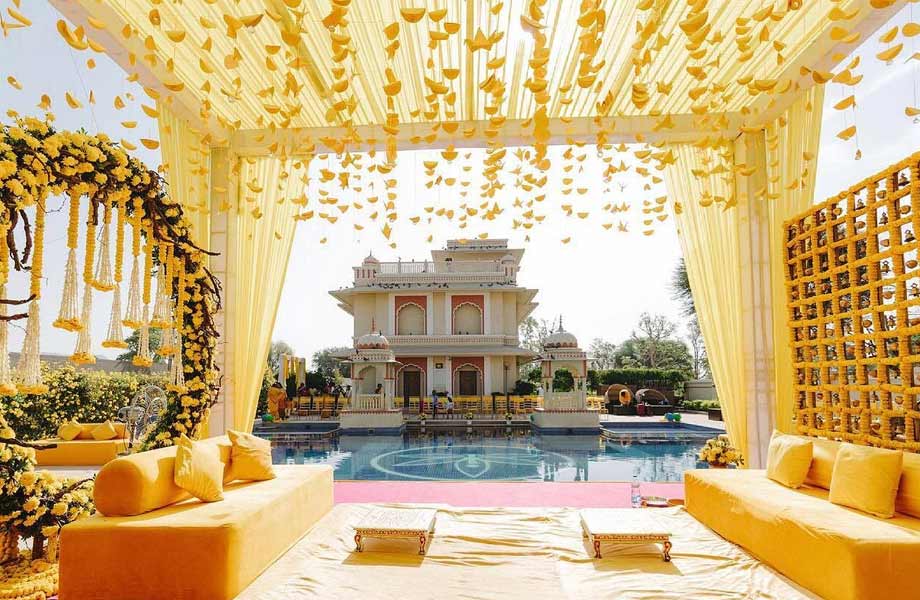
What Is the Meaning of a Destination Wedding?
What Is the Meaning of a Destination Wedding? a wedding held at a location chosen specifically for the experience it creates, rather than for convenience or proximity. The couple and their guests travel to the venue, often staying there across multiple days, and the celebration is woven into the setting rather than simply placed inside it.
Ask ten different people what the meaning of a destination wedding is, and you will get ten different answers. Some will say it is a wedding held abroad. Others will say it is any celebration outside your home city. A few will say it is simply a wedding with fewer guests at a beautiful location. None of these answers are entirely wrong — but none of them are complete, either.
The real meaning of a destination wedding goes beyond geography. It is about intention. It is about choosing to mark one of life's most significant moments in a place that adds something irreplaceable — a palace courtyard at golden hour, a misty mountain valley at dawn, a stretch of quiet beach at sunset. The destination is not just a backdrop. It becomes part of the story.
This guide explains what a destination wedding genuinely means, what it looks like in the Indian context, which places offer the most extraordinary settings, and what you genuinely need to know before committing to one. No fluff. No empty inspiration. Just honest, useful information.
What a Destination Wedding Actually Means
At its most straightforward, the meaning of a destination wedding is this: a wedding held at a location chosen specifically for the experience it creates, rather than for convenience or proximity. The couple and their guests travel to the venue, often staying there across multiple days, and the celebration is woven into the setting rather than simply placed inside it.
That distinction — woven into the setting, not placed inside it — is the heart of the whole thing. A wedding held in a Jaipur palace courtyard, where the carved sandstone arches and the smell of marigolds and the sounds of shehnai drifting through warm evening air all combine into something that could not exist anywhere else — that is a destination wedding in its truest sense. A wedding at a generic hotel near the airport, technically held in another city, is not.
The word "destination" is doing real work in that phrase. It implies that the journey matters, that the arrival means something, and that the place itself is a participant in the celebration rather than merely a container for it.
Where Did the Idea Come From?
The concept is not new. Royal families across the world have always married in places of significance — not the nearest available hall. In India, the tradition of celebrating weddings at palaces, temples, and heritage estates stretches back centuries. What has changed is who has access to these experiences. Destinations that were once the preserve of royalty and the very wealthy are now accessible to ordinary couples through professional planning, a growing heritage property market, and packages that make extraordinary venues financially viable for the first time.
That democratisation of the destination wedding — the idea that a schoolteacher from Pune and a software engineer from Bengaluru can genuinely celebrate their wedding at a Rajasthani fort — is one of the more quietly remarkable things that has happened in Indian social life over the past decade.
What Is a Destination Wedding in India? — Understanding the Indian Context
In the Western sense, a destination wedding often means an intimate gathering abroad — a small ceremony in Tuscany, a beach wedding in the Maldives, a château in the south of France. The guest count is usually low, the formality is relaxed, and the emphasis is on the couple rather than the extended family.
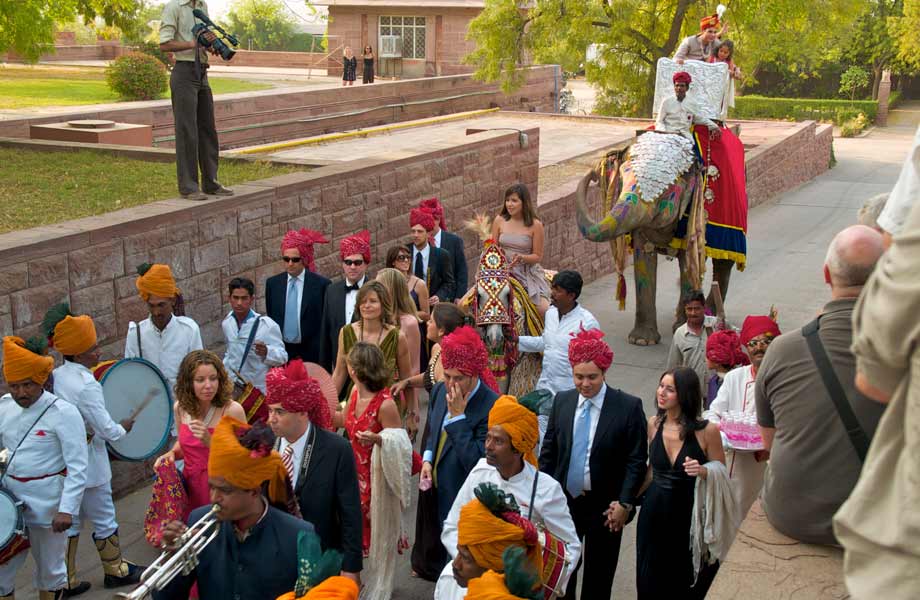
An Indian destination wedding works differently, and it is important to understand how. Here, the scale is usually larger. Families are central. Multiple functions — mehendi, sangeet, haldi, ceremony, and reception — are spread across two to four days. The hospitality is elaborate. The food is abundant. The entertainment is genuine, not token. And the guest list, even at a "small" Indian destination wedding, might still run to 80 or 100 people.
None of this diminishes the meaning. It simply means that a destination wedding in India is its own thing — not a copy of a Western concept, but a distinctive celebration that combines Indian wedding traditions with the transformative power of an exceptional setting.
Why Indian Couples Are Choosing Destination Weddings Now
The shift has been striking. A decade ago, destination weddings in India were almost entirely associated with Bollywood celebrities and business families. Today, dual-income urban couples across every tier of wealth are choosing destination celebrations — and the reasons are not purely about showing off.
Many couples are choosing smaller, more intentional guest lists. They want the people in the room to actually matter to them, rather than attending out of obligation. A destination wedding naturally filters the list — those who travel to celebrate you genuinely want to be there. That changes the entire atmosphere of the celebration. Something about being far from home, in a beautiful unfamiliar place, with people who chose to be present — it loosens everyone up in the best possible way.
Here is something worth sitting with: the most common feedback couples give after a destination wedding is not about the décor, the food, or even the venue. It is about the conversations they had. The long dinners. The early morning walks. The moments between functions when guests who had never met before found themselves talking for hours. Destination weddings create time and space for that in a way that a single-day local wedding rarely does.
Which Place Is Best for a Destination Wedding? — An Honest Answer
This is probably the most frequently asked question about destination weddings in India, and honestly, it is the wrong question to start with. The right question is: which place is best for us?
There is no universal answer. The best destination wedding location is the one that feels most authentically like the two of you. A couple who met trekking in Himachal Pradesh and have always been drawn to the mountains — for them, a hill station celebration with pine trees and Himalayan views is going to feel more meaningful than any palace in Rajasthan, however grand. A couple who grew up on stories of Mughal architecture and Indian heritage — for them, Agra or Jaipur might be the only places that feel truly right.
That said, certain cities in India have developed into world-class destination wedding settings, with the venues, vendors, and infrastructure to support extraordinary celebrations. Here is an honest look at the best of them.
India's Finest Destination Wedding Cities — What Each One Actually Offers
Jaipur — The Pink City
If you were designing the ideal destination wedding city from scratch, you might end up with something very close to Jaipur. The architecture is extraordinary — pink sandstone forts, carved havelis, rooftop gardens with views over a terracotta skyline. The vendor ecosystem is mature. The heritage property market is extensive, with everything from intimate 40-guest courtyards to grand forts that can accommodate 600 people. A destination wedding in Jaipur works across almost every budget tier, which is why it consistently tops destination wedding shortlists across India. The pink city rewards couples who lean into its inherent character rather than trying to impose a generic aesthetic on top of it.
Jodhpur — The Blue City
Jodhpur is what happens when you mix Rajput heritage, blue-painted streets, and a fort so enormous that it looks like it grew from the rock. Mehrangarh Fort looming over wedding celebrations below is an image that stays with guests for years. A destination wedding in Jodhpur suits couples who want something genuinely dramatic — where the setting makes a statement before a single decorator has arrived. Umaid Bhawan Palace, still partially the residence of the royal family, is one of India's most celebrated wedding venues. Jodhpur's warm desert light, particularly at the golden hour, produces wedding photographs that look unlike anything taken elsewhere in the country.
Jaisalmer — The Desert City
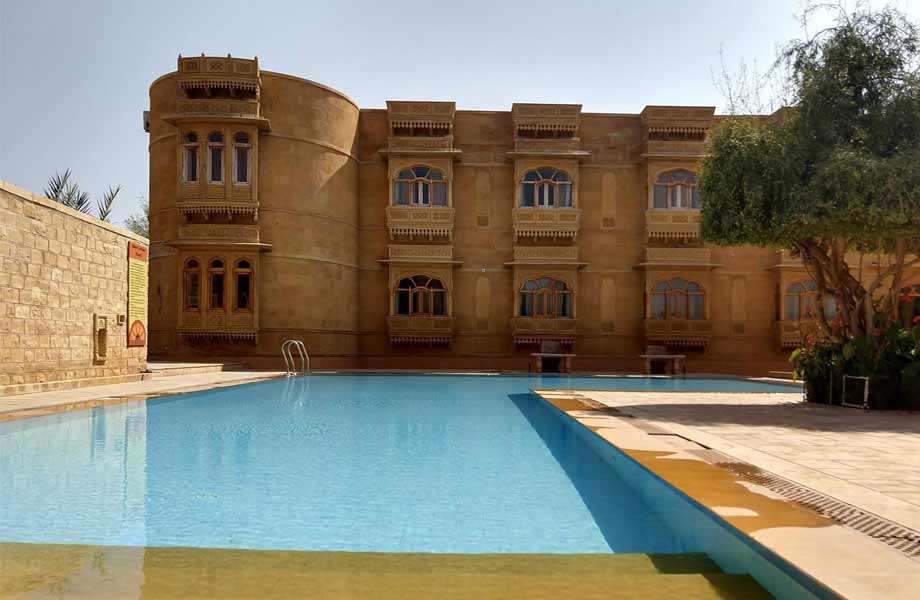
There is genuinely nothing else like a Wedding Destination in Jaisalmer — candlelit desert camps, camel silhouettes at sunset, folk musicians playing under a winter sky thick with stars. Jaisalmer is for couples who want their wedding to feel like a different world entirely. The planning requirements here are more complex than any other city — power, water, catering transport, and guest logistics all require specialist knowledge — but the result, when executed well, is an experience that no other destination in India can replicate. Strictly a winter destination: November to February only. Any other time, the desert heat makes outdoor celebrations untenable.
Agra — The City of the Taj
Agra is the only city in the world where the Taj Mahal — one of humanity's greatest architectural achievements — can be your wedding backdrop. Heritage havelis with Taj views, rooftop venues that face the monument, and boutique properties along the Yamuna offer intimate and grand celebrations alike. Monument-zone regulations require specific permits and experienced local knowledge, which is why a specialist best wedding planner in Agra is not optional here — it is essential. Agra is also remarkably accessible: under two hours from Delhi by rail on the Gatimaan Express, making guest travel straightforward for families spread across North India.
Hill Stations — Shimla, Mussoorie, Kasauli
Hill Station Destination Weddings have seen the fastest growth of any category in India over the last three years. Pine forests, cool Himalayan air, misty mornings, and the kind of quiet beauty that Rajasthan's grand venues cannot offer — hill stations attract couples who value atmosphere over grandeur. Shimla and Mussoorie are the most established; Kasauli, Nainital, and Dharamshala are growing quickly. The best value in India's destination wedding market right now is a well-planned hill station celebration for 30 to 80 guests. The natural setting reduces décor requirements significantly, and accommodation within the resort keeps the group together for the full experience.
Delhi NCR — The Metropolitan Option
Not every destination wedding needs to involve a long journey. A Destination Wedding in Delhi and its surrounding NCR corridor — Gurugram, Noida, Faridabad — offers a different kind of advantage: scale, accessibility, and the widest venue variety in India. Five-star hotel ballrooms, luxury farmhouses in Chattarpur, and heritage properties within an hour of central Delhi all sit within this market. For families with elderly members who cannot travel far, or for very large weddings where guest logistics need to be simple, Delhi NCR solves problems that other destinations create. It also connects directly to Agra, Jaipur, and Shimla for multi-city celebration programmes.
Goa and Kerala — Beach Destination Weddings
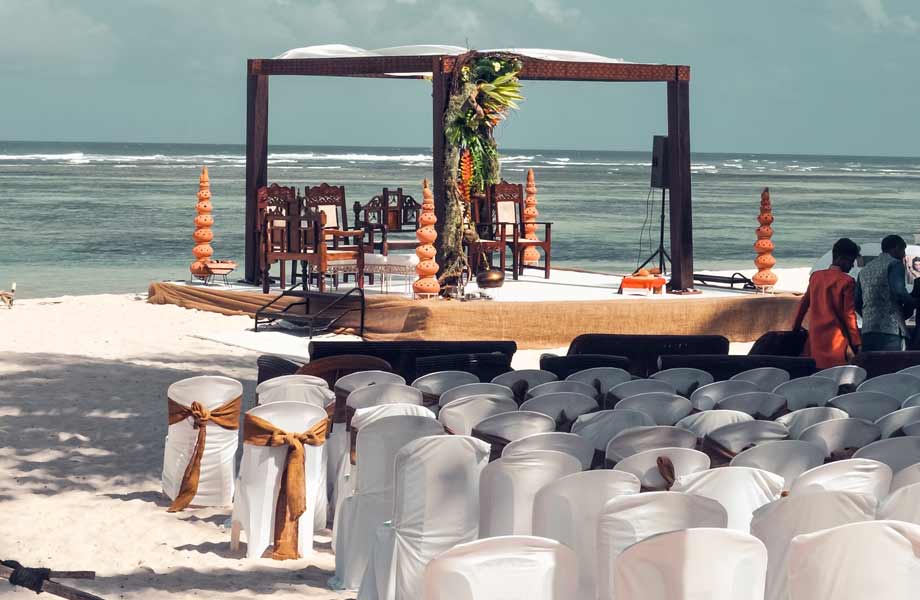
A Beach Destination Wedding in India means, almost always, Goa or Kerala — and they offer very different experiences. Goa is cosmopolitan, energetic, and particularly popular with NRI couples who want an international-feeling celebration. Portuguese-era villas in North Goa, beach-garden properties in Candolim, and cliff-top venues near Vagator all offer settings that feel genuinely unique. Kerala — the backwaters, the plantation estates of Coorg, the hillside retreats above Munnar — is quieter, more immersive, and produces weddings that feel more like a retreat than an event. Both require October to February bookings to avoid the monsoon.
Destination Wedding vs Local Wedding — What Is Actually Different?
The comparison comes up in almost every planning conversation. Is a destination wedding genuinely better than a local one? The honest answer is: it depends entirely on what you are measuring.
The table above simplifies a complex reality, but the broad strokes hold. A destination wedding is not inherently superior to a local celebration — it is a different kind of experience, with different trade-offs. The couples for whom destination weddings work best are those who value the quality of the experience over the scale of the guest list, who genuinely want to create a multi-day memory rather than a single grand evening, and who are willing to invest in professional planning to manage the complexity that comes with celebrating away from home.
Seven Reasons Couples Choose Destination Weddings — And One They Rarely Admit To
01 The setting becomes part of the story
Twenty years from now, you will not remember the exact shade of marigold at your mandap. You will remember the moment you arrived at the Jaisalmer fort as the sun was setting and the sandstone turned gold. The setting creates memories that décor alone cannot manufacture.
02 Every guest who comes genuinely wants to be there
When guests travel to celebrate you, the obligatory attendees quietly remove themselves from the list. The people who show up are the ones who actually matter. That changes the emotional temperature of the entire celebration — noticeably, immediately, permanently.
03 Multi-day celebrations create genuine connection
The evening before the ceremony, the morning after breakfast, the impromptu gathering by the pool between functions — destination weddings create unscheduled time that local weddings cannot. Families who have never met find themselves talking for hours. That is an extraordinary gift to give the people you love.
04 The photographs are genuinely different
Heritage architecture, mountain light, desert dunes, lake reflections — the natural visual richness of India's destination wedding settings produces photographs that are recognisably special. No amount of studio lighting or constructed backdrops replicates what a Jodhpur rooftop at golden hour or a Shimla forest clearing at dawn creates naturally.
05 Smaller guest lists often mean better quality per head
The money saved on 200 fewer plates of food and 200 fewer metres of fabric can go towards a better photographer, a more personalised décor concept, or simply a more extraordinary venue. Many couples discover that their destination wedding, with 80 guests, actually felt more luxurious than their local wedding with 300 would have done.
06 The celebration feels like an event with a beginning, middle, and end
Local weddings often feel like a series of logistical moments strung together. Destination weddings, because guests are present and residing together across multiple days, have a narrative arc. There is anticipation, there is celebration, and there is a gentle, shared winding down. That arc is deeply satisfying in a way that a single evening event rarely is.
07 The hidden reason most couples will not say aloud
A destination wedding is, in part, a way of taking ownership of your own celebration. When the wedding is local, families often feel entitled to expand the guest list, change the décor decisions, and override the couple's choices — because "it is happening here, near us." Moving the celebration to a chosen destination creates a natural boundary. The wedding, in the most respectful possible way, becomes yours.
Things Nobody Tells You Before You Book a Destination Wedding
Every article about destination weddings will tell you how beautiful they are. Fewer will tell you what they genuinely involve. Here is the honest version.
The Planning Complexity Is Real — And Requires Professional Help
Coordinating a destination wedding from another city — often whilst working full time — is genuinely difficult. Vendors who seemed reliable over WhatsApp have a habit of underdelivering in person. Venues that looked different in photographs have a surprising number of limitations in reality. Décor that was approved via a colour-graded mockup looks completely different under actual venue lighting. None of this is insurmountable, but all of it requires an experienced on-ground team to manage. Couples who try to plan destination weddings without professional support almost universally wish they had not.
Weather Is Not Always Your Friend
February in the Thar Desert is magical. August in the Thar Desert is not. A hill station in October is glorious. The same hill station in July, during monsoon, involves fog so thick you cannot see the guests at the back of the ceremony space. Season selection is not a minor detail — it is fundamental. And even within the right season, mountain weather and coastal conditions require a contingency plan that should be contracted, not improvised.
Not All Guests Will Come — and That Is Fine
Destination weddings require guests to take time off work, arrange travel, and often spend money on accommodation. Some people will not be able to come, and some will politely decline without a clear reason. Couples who build their destination wedding around the assumption of a specific guest count and then feel hurt when some guests cannot attend are setting themselves up for unnecessary pain. The right attitude: the people who come are your celebration. Those who cannot make it can be celebrated in other ways.
The Best Venues Book Very Early
The heritage havelis in Jaipur that look magnificent in photographs and cost a fraction of a five-star hotel — they have three or four genuinely extraordinary dates available each season, and they go quickly. The best desert camps in Jaisalmer are typically fully booked for January and February by September of the previous year. If you want the venue you actually want, start looking earlier than feels necessary.
Frequently Asked Questions
Q1.What is the meaning of a destination wedding?
A destination wedding is a wedding held at a location chosen specifically for the experience, atmosphere, and significance it creates — rather than for proximity or convenience. The couple and their guests travel to the chosen place, often for multiple days, and the destination itself becomes a meaningful part of the celebration. What makes it a destination wedding is intention — the deliberate choice of a place that adds something irreplaceable to the experience. A palace in Rajasthan, a mountain resort in Himachal Pradesh, a beach in Goa, or a heritage property near the Taj Mahal in Agra — in each case, the setting is not just a backdrop, it is part of the story.
Q2.Is a destination wedding expensive in India?
Not necessarily — and this surprises many couples. A destination wedding with a thoughtful guest list of 60 people can cost considerably less than a local wedding with 300 guests, even when the per-head experience at the destination is luxurious. Costs vary widely: a hill station intimate wedding starts from ₹5 to ₹8 lakh, a heritage haveli celebration in Jaipur for 100 guests runs ₹15 to ₹35 lakh, and a grand palace wedding in Udaipur can reach ₹1 crore or more. There is genuinely a destination wedding in India for almost every budget — the key is matching the scale of the celebration to the scale of the budget, not trying to replicate a grand wedding at an intimate price.
Q3.Which is the best place for a destination wedding in India?
The honest answer is that it depends entirely on what matters most to you. For a royal heritage experience, Jaipur and Jodhpur are unmatched. For romance and lakeside grandeur, Udaipur is the obvious choice. For the most dramatic and completely unique setting, Jaisalmer's desert is in a category of its own. For cool mountain air and natural beauty, hill stations like Shimla or Mussoorie are wonderful. For a relaxed, tropical celebration, Goa is ideal. For easy accessibility and grand venues, Delhi NCR covers everything. There is no single "best" destination — the right one is the place that feels most authentically like you both.
Q4.How many guests is typical for a destination wedding in India?
Most destination weddings in India involve between 50 and 200 guests, though intimate celebrations with 20 to 50 guests are growing rapidly in popularity — particularly among younger couples and those living abroad. There is no fixed rule. The destination itself often guides the number: a boutique hill station property may comfortably hold 60 guests, whilst a grand fort in Jodhpur can host 500. What matters most is that the guest list is thoughtful rather than exhaustive. Destination weddings work best when every person present has a genuine reason to be there.
Q5.How early should we begin planning a destination wedding in India?
For peak season weddings between October and February, begin planning at least 9 to 12 months in advance. The best heritage venues in Jaipur, lakeside properties in Udaipur, and desert camps in Jaisalmer fill up 10 to 14 months ahead for popular dates. Starting early is not just about the venue — it gives you access to the finest photographers, the most experienced caterers, and the most sought-after entertainment at the destination. If you are planning for the quieter season between March and June, 5 to 6 months is generally workable, though earlier is always better.
Plan Your Celebration with Shubh Prarambh
From Jaipur's heritage havelis to Jaisalmer's desert camps, Shimla's mountain resorts to Agra's Taj-view venues — our team has the local knowledge and planning experience to make your destination wedding extraordinary.
Visit also: Top-rated wedding planner services near me in India
Related Articles

 Our
Story
Our
Story